PRODUCTS LIST
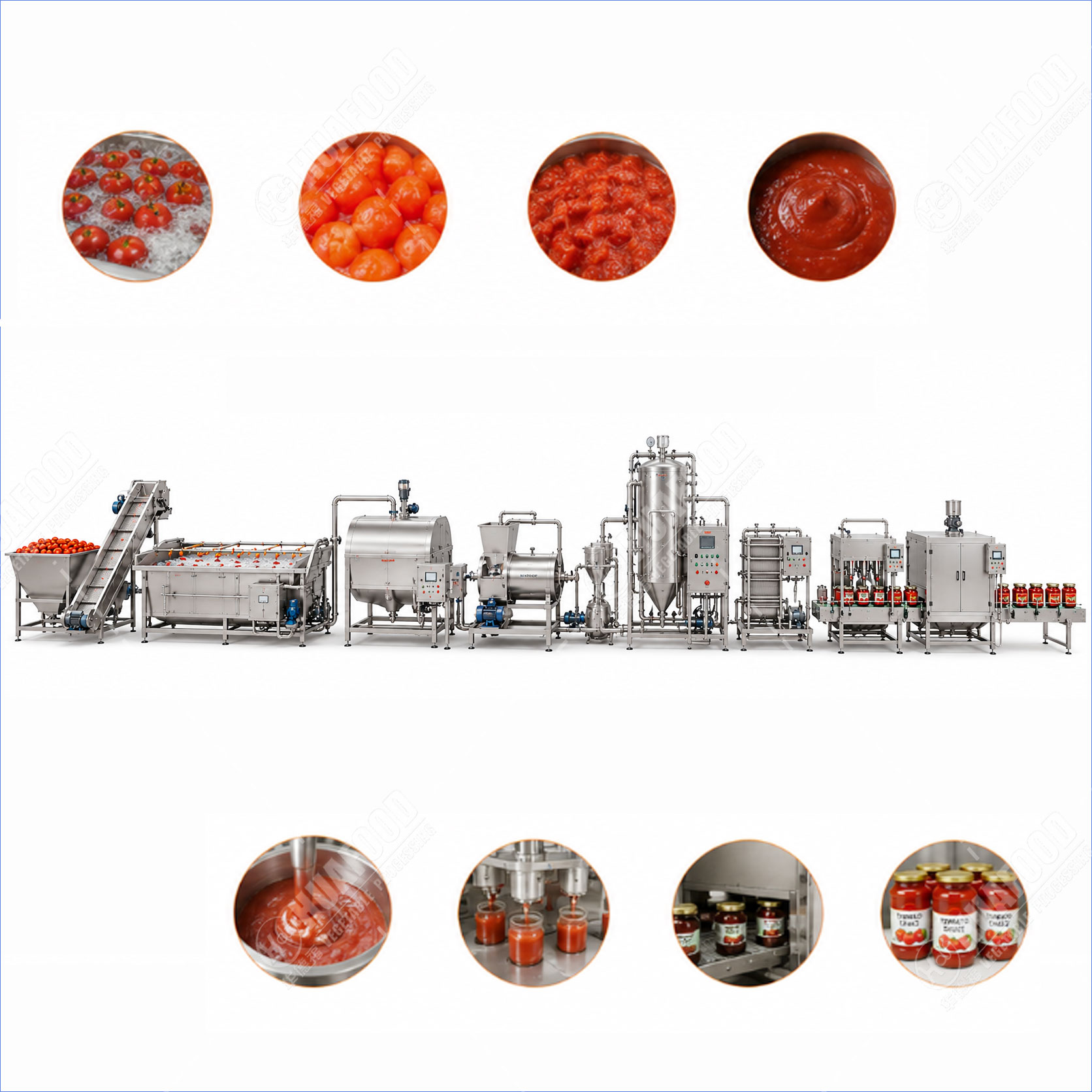
500kg/h Small Scale Tomato Paste Production Line Affordable For Small Farmers
Product Details:
| Place of Origin: | Henan Huafood, China |
|---|---|
| Brand Name: | HUAFOOD |
| Certification: | ISO,CE,SGS |
| Model Number: | Cutomized |
| Material | 304 food grade stainless steel |
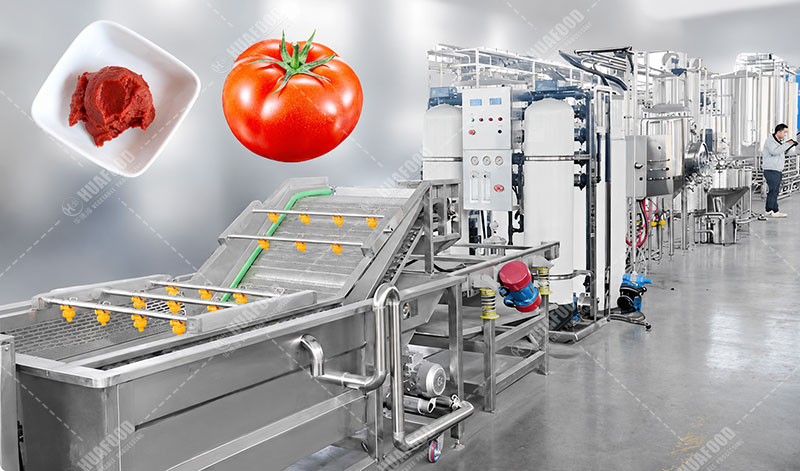
The 500kg/h Small Tomato Paste Production Line is an affordable and efficient solution designed specifically for small farmers, agricultural cooperatives, food startups, and small-scale tomato processing businesses. This complete processing system transforms fresh tomatoes into high-quality tomato paste, tomato sauce, ketchup, and other tomato-based products that can be sold locally in bottles, bags or cans. while helping users reduce post-harvest losses and increase product value.
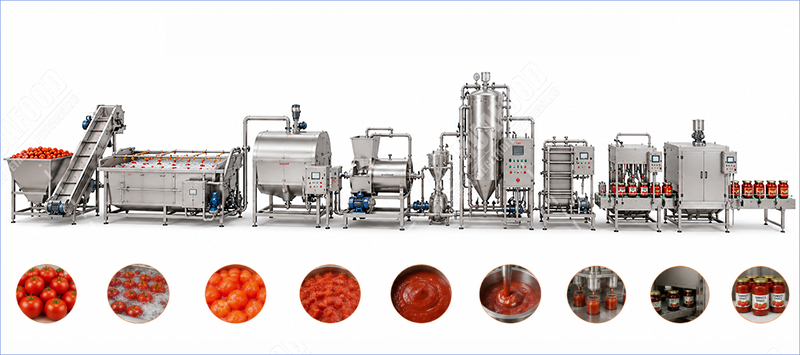
With a processing capacity of 500kg of fresh tomatoes per hour, the line offers an ideal balance between investment cost and production efficiency. The equipment is manufactured from food-grade SUS304 stainless steel, ensuring hygienic processing, easy cleaning, and long service life. The compact design makes it suitable for small and medium-sized processing facilities with limited factory space.
By converting fresh tomatoes into shelf-stable tomato paste products, farmers can significantly improve profitability, extend product shelf life, and create additional income opportunities throughout the year.
How Is Tomato Paste Made In A Factory
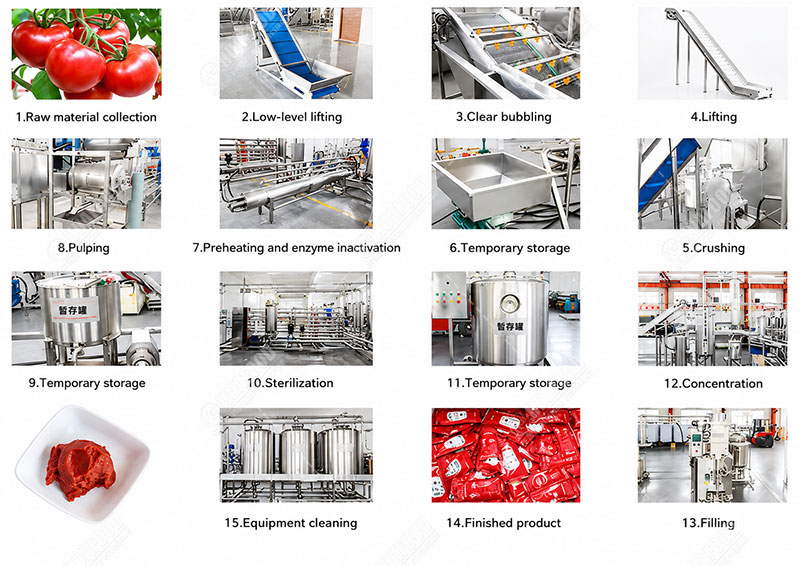
Fresh Tomatoes → Auto Cleaning → Pre-cooking & Skin Removal → Pulping/Seed Separation → Vacuum Concentration → Pasteurization → Semi-Auto Filling → Sterilization → Labeled Jars
1. Tomato Washing
Fresh tomatoes are loaded into the bubble washing machine, where dirt, sand, leaves, and other impurities are removed through water circulation and gentle agitation.
2. Sorting and Inspection
After washing, tomatoes pass through a sorting conveyor where damaged, rotten, or unqualified tomatoes can be removed manually to ensure consistent product quality.
3. Crushing and Pulping
Qualified tomatoes enter the crusher and pulping machine. The tomatoes are crushed and processed into tomato pulp while seeds and skins are automatically separated.
4. Concentration
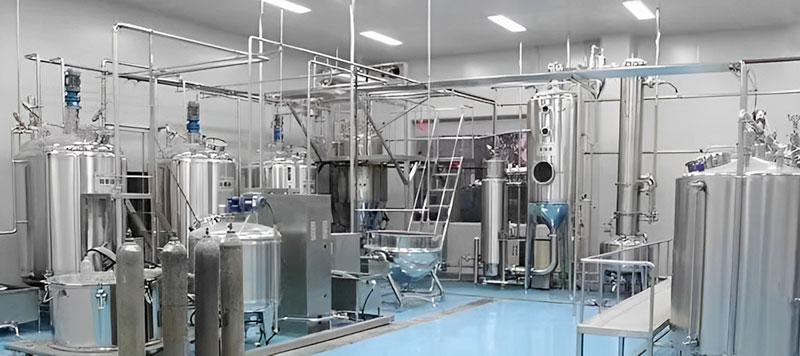
The tomato pulp is transferred into a vacuum concentration system where excess moisture is removed at low temperatures. This process preserves the natural color, flavor, and nutrients of the tomatoes while producing concentrated tomato paste.
5. Sterilization
The concentrated tomato paste is heated through a sterilization system to eliminate microorganisms and ensure food safety.
6. Filling and Packaging
The finished tomato paste can be filled into various packaging formats, including:
- Glass bottles
- Plastic bottles
- Sachets
- Stand-up pouches
- Cans
- Drums
The packaging system can be customized according to customer requirements and local market demands.
Small Tomato Paste Processing Plant Video
Here is the small scale tomato paste production processing line youtube video installed in our customer’s factory for your reference!!
Tomato Paste Production Line Advantage
Optimized for small batch production, minimizing raw material waste.
Robust stainless steel construction suitable for African tropical climate.
Turn blemished/overripe tomatoes into paste—no more 40% spoilage losses!
Flexible output capacity from 200kg/h to 1000kg/h to meet different farm sizes.
No skilled labor required—simplified user-friendly interface with multilingual support.
Tomato Paste Processing Line Features
Energy-efficient system, adaptable to local grid setups;
Modular equipment design, easy to operate and maintain;
Multi-package format support: bottles, pouches, or drums;
Built for village sheds: No large factory needed,small footprint, ideal for limited workshop space in rural areas.. Machines fit 20m² sheds, powered by diesel gensets or grid;
Tomato Paste Production Line Machine Benefits
Enables local branding and micro-processing business opportunities.
Helps farmers diversify income, reducing dependency on seasonal market prices.
Converts fresh tomatoes into value-added products, extending shelf life and market reach.
Reduces post-harvest loss, especially in peak season when fresh tomatoes are oversupplied.
Example
For Niger/Burkina Faso: Use 400g tins—preferred by street food vendors.
For Ghana/Togo markets: Package in FDA-approved pouches (like Leemax in Accra), sell to shops, schools, or export clusters.
Tomato Paste Processing Plant Evidence
Evidence | African Success Stories
Nigeria: Dangote’s Kano plant (120 tons/day) lifted farmer prices 300% .
Ghana: 30,000 tons/year paste line created 70+ local jobs.
Cameroon: Small exporters saw 31% sales surge using similar compact lines.
User feedback: “After helping us transform into a paste workshop, we reduced tomato losses by 50% each year and tripled our revenue.”
This small scale tomato paste production line is widely installed across Nigeria, Kenya, Ghana, Ethiopia, and Uganda with positive feedback from local co-ops and farmer groups.
Your Tomato Revolution Starts Here
This isn’t just machinery—it’s wealth creation for smallholders. Reduce waste, stabilize prices, and put your branded paste on local tables. With capacities from 25kg–500kg fresh tomatoes/hour 4, start small, scale as you grow.
✉️ Stop the Glut, Start the Profit!
👇 Chat Now for Your Custom Line!
Tell us your tomato volume, power access, and target package (tins/pouches/bottles). Get a free layout plan + ROI estimate in 24 hours!
 Inquiry Huafood Whatsapp Wechat Line: